Health
Do You Want Pain? Meaning, Context, Uses, and What the Phrase Can Refer To


The phrase “do you want pain” can mean different things depending on where it appears. It may be a straightforward question about physical discomfort, a dramatic line in music or entertainment, a phrase used in gaming, or a figurative expression about deliberately accepting difficult experiences. Because the wording is short and context-dependent, understanding the surrounding conversation is essential.
Search results show the phrase appearing in several unrelated contexts. For example, a translated song passage uses “Do you want pain?” as a dramatic lyrical expression, while a Marvel Rivals mod uses the phrase in connection with Winter Soldier’s ultimate voice lines.
In everyday English, however, the meaning is much simpler: someone may be asking whether another person wants something intended to relieve pain or whether that person is willing to experience pain. The exact interpretation depends on the words surrounding the phrase.
What Does “Do You Want Pain?” Mean?
At its most literal level, “Do you want pain?” asks whether someone wants to experience physical or emotional discomfort.
The phrase can sound unusual in ordinary conversation because people generally do not ask whether another person wants pain. More natural expressions might be “Are you in pain?”, “Do you want pain relief?”, or “Do you want pain medication?” when discussing a medical situation.
For example:
- “Are you in pain?” asks whether someone is experiencing discomfort.
- “Do you want pain medication?” asks whether someone wants medicine to reduce discomfort.
- “Do you want pain?” literally asks whether someone wants the painful experience itself.
The distinction is important. A medical question such as “Do you want pain medication?” has an entirely different meaning from the shorter phrase “Do you want pain?”. Translation resources likewise treat “do you want pain medication” as a question concerning medication rather than the desire to experience pain.
“Do You Want Pain?” in Music and Lyrics
One reason people may search for “do you want pain” is because the phrase appears in songs and translated lyrics.
A translation of Nikki Jamal’s “Herhalde (Probably)” includes a passage rendered in English as a question about whether someone wants tears or pain.
In a musical context, the phrase does not necessarily represent a literal desire for physical suffering. Songwriters often use words such as pain, tears, heartbreak, and suffering metaphorically to describe emotional conflict, relationship problems, revenge, or dramatic confrontation.
That makes context especially important when searching for an exact lyric. A phrase may appear in multiple songs, fan translations, lyric websites, edits, or social-media posts. A translated lyric may also differ from the original wording because literal translations do not always preserve the exact meaning, rhythm, or emotional tone of the source language.
Therefore, when “do you want pain” appears in lyrics, it is useful to identify the artist, song title, language, or surrounding lyric before assuming its meaning.
The Phrase in Gaming and Internet Culture
The wording also appears in gaming-related content. A notable example is a Marvel Rivals mod titled “Do you want pain – Winter Soldier Ultimate,” which modifies Winter Soldier’s ultimate voice content. The mod was originally uploaded in February 2025 and updated in March 2025.
In this setting, the phrase is best understood as part of a character’s dramatic presentation rather than an ordinary conversation about physical pain. Video games frequently use intimidating or theatrical dialogue to reinforce a character’s identity and make abilities more memorable.
This demonstrates why searches for short phrases can produce very different results. “Do you want pain” may be connected to a song in one search and a gaming modification in another. The words alone do not identify one specific source.
Physical Pain Versus Emotional Pain
Another important distinction is between physical pain and emotional pain.
Physical pain is generally associated with injury, illness, inflammation, or another bodily condition. It serves an important warning function because the sensation can indicate that something in the body needs attention. Emotional pain, meanwhile, can describe experiences such as grief, rejection, loneliness, disappointment, or heartbreak.
When someone says “I don’t want pain,” they may be speaking about either kind.
In everyday writing, the word “pain” can therefore carry a broader meaning than its medical definition. A person might say that they want to avoid the “pain” of a breakup, the “pain” of failure, or the “pain” associated with losing someone. In these cases, the word describes emotional suffering rather than a physical sensation.
The surrounding words usually reveal which meaning is intended.
Why Context Matters When Searching “Do You Want Pain”
Short search phrases often have multiple possible interpretations. This is particularly true when the phrase contains common words.
For “do you want pain,” useful context can include:
- Where you saw the phrase
- The name of a song or artist
- A movie, television show, or game
- The complete sentence surrounding it
- The original language if it was translated
- Whether the phrase appeared in a meme or social-media video
- Whether it referred to medical treatment
For example, if the phrase appeared beside a character image, it may be associated with a game or movie. If it appeared underneath a song title, it may be a lyric. If a healthcare professional said something similar, the intended meaning could concern pain relief.
Translation can create another layer of ambiguity. A foreign-language phrase may be translated into several natural English versions, and the most literal translation may not be the most idiomatic one. Discussions of Bulgarian translation, for example, demonstrate how grammatical particles and contextual meaning can make direct word-for-word translations misleading.
Is “Do You Want Pain?” Natural English?
From a grammatical perspective, “Do you want pain?” is understandable. However, it is not a common neutral expression in everyday English.
Native speakers are more likely to say:
- “Are you in pain?”
- “Do you feel pain?”
- “Do you want pain relief?”
- “Do you need pain medication?”
- “Do you want to experience pain?”
The shorter construction becomes more natural when it is deliberately dramatic, poetic, fictional, or confrontational.
This explains why the phrase can sound particularly strong in songs, movies, games, memes, and fictional dialogue. Its unusual construction gives it a sharper emotional effect than a routine question such as “Are you in pain?”
Pain, Choice, and the Meaning Behind the Phrase
The phrase can also be interpreted figuratively as a question about whether someone is willing to accept difficulty.
People sometimes use pain as shorthand for hardship, sacrifice, struggle, or consequences. Discussions about personal goals, sports, exercise, work, and discipline may describe difficult experiences as “pain,” although that usage should not be confused with medical pain.
There is an important distinction between voluntarily accepting an ordinary challenge and deliberately causing physical injury. Pain can be a warning signal from the body, and persistent, severe, or unexplained pain deserves appropriate medical attention rather than being treated as something a person simply needs to endure.
For that reason, the phrase “do you want pain” should not automatically be interpreted as encouragement to seek suffering. Its meaning depends on the context in which it is being used.
Final Thoughts on “Do You Want Pain?”
“Do you want pain?” is a short but highly context-dependent phrase. In ordinary English, it literally asks whether someone wants to experience pain, but it can sound unusual outside a dramatic or specialized setting.
Online, the phrase can refer to music lyrics, translations, gaming content, fictional dialogue, or figurative discussions of hardship. Search results demonstrate that it does not point to one universally recognized meaning or source.
The best way to understand the phrase is therefore to examine where it appeared and what surrounded it. If it is a medical conversation, the intended wording may actually be “Do you want pain medication?” If it appears in entertainment, it may be dramatic dialogue or a lyric. If it appears in motivational or figurative writing, “pain” may represent struggle rather than physical suffering.
Ultimately, context determines the meaning. A few additional words can transform “do you want pain” from a literal question into a lyric, a fictional threat, a gaming reference, or a metaphor for difficult experiences.

Blackhead removal videos 2025 became a popular search topic as skincare content continued to attract large audiences on video platforms and social media. These videos often show close-up extractions of clogged pores, skincare routines, professional comedone removal, and before-and-after results. For many viewers, the appeal comes from seeing a visible transformation in a short amount of time.
However, blackhead extraction is more than a satisfying visual process. Blackheads are a type of acne called open comedones, and removing them incorrectly can irritate the skin or contribute to infection and scarring. The American Academy of Dermatology (AAD) explains that the dark appearance is not caused by dirt; rather, material inside an open pore reacts with oxygen, creating the characteristic dark color.
Understanding what these videos show can help viewers separate useful skincare information from potentially harmful DIY techniques. In this guide, we explore blackhead removal videos, professional extraction, skincare treatments, common mistakes, and safer ways to manage blackheads in 2025 and beyond.
What Are Blackheads and Why Do They Appear?
A blackhead develops when excess oil and dead skin cells accumulate inside a pore that remains open. Because the pore is exposed to air, the material inside undergoes oxidation and appears dark. This is why blackheads should not be treated as ordinary dirt that can simply be scrubbed away.
Blackheads can appear on several areas of the body, but they are particularly common on the nose, forehead, chin, and other parts of the face. These areas can produce more oil, making them more susceptible to clogged pores.
Several factors can contribute to blackheads, including:
- Excess sebum or skin oil
- Dead skin cell buildup
- Naturally clogged pores
- Hormonal changes
- Certain skincare or cosmetic products
- Individual skin characteristics
The presence of blackheads does not necessarily mean that someone has poor hygiene. In fact, aggressive washing and repeated scrubbing can irritate acne-prone skin rather than solve the underlying problem. The AAD specifically recommends avoiding vigorous scrubbing because it can worsen acne.
Why Blackhead Removal Videos Are So Popular
The popularity of blackhead removal videos in 2025 can be explained partly by their highly visual nature. A video may begin with visibly clogged pores and end with apparently cleaner skin within minutes. This creates an immediate before-and-after effect that is particularly suited to short-form video.
Professional extraction videos can also be educational because they demonstrate how a trained practitioner handles clogged pores. Viewers can observe the use of specialized instruments, skin preparation, controlled pressure, and post-treatment care.
Another category involves DIY blackhead removal videos, which may show squeezing, pore strips, extraction tools, masks, scrubs, or other home techniques. These videos can vary greatly in quality.
The AAD warned in 2025 that social-media skincare hacks are not automatically safe or effective. Dermatologists emphasized that different types of acne require different approaches and that some viral techniques may cause more harm than benefit.
Consequently, viewers should treat online videos as demonstrations rather than automatically copying every technique they see.
Professional Blackhead Extraction vs. DIY Removal
One of the biggest differences between professional extraction and DIY removal is technique and control.
A dermatologist or appropriately trained skincare professional can examine the skin, determine whether the lesion is actually a blackhead, and decide whether extraction is appropriate. The AAD notes that comedone extraction can be an option for stubborn blackheads and whiteheads when ordinary treatment has not cleared them.
Professional acne extraction is also designed to reduce unnecessary trauma to the surrounding skin. This matters because repeatedly squeezing or picking at a blackhead can cause inflammation, irritation, infection, or potentially scarring.
By contrast, DIY extraction often involves applying pressure with fingers or unregulated tools. When excessive force is used, the contents may not come out cleanly, and surrounding tissue can become irritated.
The AAD specifically advises against squeezing blackheads because doing so can result in infection or permanent scarring.
This does not mean every home skincare routine is inappropriate. It means that there is an important distinction between gentle acne management and physically forcing a clogged pore to empty.
Safer Ways to Treat Blackheads at Home
Instead of focusing entirely on extraction, effective blackhead care generally aims to keep pores from becoming clogged in the first place.
The AAD identifies topical retinoids as an important treatment for blackheads because they help unclog pores. Adapalene is one retinoid available without a prescription in some markets, while other retinoids may require medical supervision.
Salicylic acid is another commonly used ingredient. It helps exfoliate the skin and unclog pores and is available in various acne products. The AAD’s acne guidelines include topical salicylic acid as a conditional treatment recommendation.
A simple routine may include:
- A gentle cleanser
- An appropriate blackhead treatment such as salicylic acid or a retinoid
- A non-comedogenic moisturizer
- Broad-spectrum sunscreen during the day
It is also important not to introduce multiple aggressive products at once. The AAD recommends giving acne treatments time to work rather than constantly switching between products. Improvement may take several weeks, while clearer skin can take longer.
Common Mistakes Shown in Blackhead Removal Videos
Not every technique shown in a viral video is appropriate for every skin type. Some of the most common mistakes involve excessive squeezing, aggressive scraping, harsh scrubbing, and overuse of exfoliating products.
One misconception is that blackheads need to be scrubbed away because they are dirt. As noted above, their dark color results from oxidation rather than ordinary surface dirt.
Another problem is attempting to extract a spot that may not actually be a blackhead. Some small dots around the nose, for example, can be sebaceous filaments, which are normal structures associated with the skin’s oil glands. They can become more noticeable but are not simply the same thing as blackheads.
Repeatedly trying to remove these structures can lead to unnecessary irritation.
Pore strips may temporarily remove surface material, but they do not necessarily address the processes responsible for recurring clogged pores. Similarly, harsh scrubs may create a temporary feeling of smoothness while irritating the skin barrier.
The goal should therefore be consistent, gentle treatment rather than increasingly aggressive extraction.
How to Watch Blackhead Removal Videos Responsibly
If you enjoy watching blackhead removal videos 2025, there are several ways to make the experience more useful.
First, consider who created the video. Content from a board-certified dermatologist or qualified medical professional generally provides more reliable information than an anonymous account demonstrating an unverified technique.
Second, pay attention to whether the video distinguishes between different types of acne. Blackheads, whiteheads, inflammatory pimples, cysts, and nodules are not identical conditions and should not automatically be treated the same way.
Third, be cautious about videos that promise instant or permanent results. Acne treatment normally requires consistency. The AAD says many acne treatments need four to six weeks before improvement becomes noticeable, with more complete clearing potentially taking two to three months or longer.
Finally, avoid copying procedures that involve significant bleeding, deep puncturing, burning, or forceful manipulation. A satisfying video does not necessarily demonstrate a safe procedure.
When to See a Dermatologist for Blackheads
Occasional blackheads can often be managed with an appropriate skincare routine, but professional advice becomes more useful when the problem is persistent or accompanied by other forms of acne.
The AAD recommends considering dermatological care when acne does not clear with over-the-counter treatment, when deeper nodules or cysts develop, or when the condition is causing significant concern.
A dermatologist can determine whether the spots are actually blackheads and recommend treatment based on the person’s skin and type of acne. Professional comedone extraction may also be considered for stubborn blackheads and whiteheads.
Seeking professional guidance is particularly important if attempts at extraction repeatedly produce bleeding, infection, significant inflammation, or scars.
Frequently Asked Questions About Blackhead Removal Videos
Are blackhead removal videos real?
Many videos show genuine comedone extraction, while others may use editing, filters, staged demonstrations, or techniques that are not appropriate for general home use. The reliability of a video depends heavily on its creator and the procedure being demonstrated.
Are blackheads caused by dirt?
No. Blackheads contain oil and dead skin cells, and their dark appearance results from oxidation when the material in an open pore reacts with oxygen.
Is squeezing blackheads safe?
The AAD recommends not squeezing blackheads, because squeezing can cause infection or permanent scarring.
What ingredient helps remove blackheads?
Retinoids can help unclog pores, while salicylic acid helps exfoliate and unclog pores. The appropriate choice depends on the person’s skin and overall acne pattern.
How long does blackhead treatment take?
Blackhead treatment is not usually an overnight process. The AAD recommends giving an acne treatment several weeks to work; noticeable improvement may take four to six weeks, while greater clearing can take two to three months or longer.
Should I copy professional extraction videos at home?
It is safer to avoid copying invasive extraction techniques simply because they appear effective on video. Professional extraction requires appropriate technique and assessment, and incorrect pressure can damage the skin.
Conclusion
Blackhead removal videos 2025 remain popular because they combine skincare education with dramatic visual transformations. However, the most useful lesson from these videos is not necessarily how to squeeze a pore. It is understanding why blackheads form and how they can be managed safely.
Blackheads are open comedones created by the accumulation of oil and dead skin cells inside pores, and their dark appearance is caused by oxidation rather than dirt.
For ongoing management, evidence-based ingredients such as retinoids and salicylic acid, combined with gentle skincare, can help keep pores clear. For stubborn blackheads, professional comedone extraction may be an option.
As skincare content continues to evolve in 2026, viewers can enjoy blackhead removal videos while remaining critical of viral DIY techniques. The most reliable approach is to prioritize gentle treatment, consistency, professional guidance when necessary, and protection of the skin barrier rather than attempting increasingly aggressive extraction.

Total Gym exercises offer a practical way to train the entire body using a single piece of equipment. Unlike traditional weight machines that often isolate one muscle group, the Total Gym uses a sliding bodyweight resistance system that can be adjusted for different fitness levels. By changing the angle of the glide board, we can make an exercise easier or significantly more challenging.
Whether we want to build strength, improve muscular endurance, support weight management, increase flexibility, or maintain general fitness, Total Gym workouts can provide a versatile training solution. The equipment can also accommodate beginners and experienced exercisers because resistance can be adjusted according to the user’s ability.
The most effective approach is not simply performing as many exercises as possible. Instead, we should combine upper-body, lower-body, core, and cardiovascular movements into a balanced routine and gradually increase the challenge as our strength improves.
What Is the Total Gym and How Does It Work?
The Total Gym is a fitness system built around a glide board, cables, pulleys, and adjustable incline levels. Instead of lifting a fixed stack of weights, we generally use a portion of our body weight as resistance while moving the glide board along its rails.
The incline is particularly important. A lower incline generally provides less resistance, making many movements suitable for beginners. Increasing the incline increases the percentage of body weight we must move, creating a greater challenge.
This design allows the same machine to support exercises such as squats, rows, chest presses, pull-ups, lunges, abdominal movements, and leg exercises. We can therefore create a complete workout without needing a large collection of gym machines.
Another advantage is the controlled movement provided by the glide board. When performed with good technique, many Total Gym exercises encourage us to control both the lifting and lowering portions of each repetition.
Best Total Gym Exercises for the Upper Body
A strong Total Gym routine should include movements that target the chest, back, shoulders, arms, and upper-body stabilizing muscles. The equipment’s cables and bodyweight resistance make it possible to perform numerous pushing and pulling exercises.
Total Gym chest press: The chest press is one of the most useful upper-body movements. It primarily trains the chest while also involving the shoulders and triceps. We should keep the movement controlled rather than allowing the glide board to move rapidly.
Total Gym rows: Rows emphasize the upper back, lats, rear shoulders, and biceps. Pulling the handles toward the torso while keeping the shoulders controlled creates an effective back exercise.
Pull-ups: Models equipped with the appropriate attachment can provide a challenging pull-up variation. Pull-ups primarily train the back and biceps, while the core works to stabilize the body.
Shoulder exercises: Cable-based movements can be used for shoulder raises and other controlled patterns. Because the shoulder joint is relatively mobile, using appropriate resistance and maintaining good form is especially important.
Triceps extensions: Triceps-focused movements can complement pressing exercises and help develop the muscles at the back of the upper arm.
For a balanced workout, we should avoid training only the muscles we can see in a mirror. Combining pushing and pulling exercises helps create a more complete upper-body program.
Best Total Gym Exercises for Legs and Glutes
The lower body contains some of the body’s largest muscle groups, making leg and glute exercises an essential part of a Total Gym workout.
Total Gym squats are a fundamental movement. They can train the quadriceps, glutes, hamstrings, and supporting muscles. Changing the incline allows us to adjust the difficulty.
Lunges are another excellent option. They can challenge the glutes and thighs while requiring balance and coordination. We should begin with a comfortable range of motion and focus on maintaining stable knee and hip alignment.
Single-leg exercises can help address differences in strength between the two sides of the body. However, they are more demanding than bilateral exercises, so beginners should establish good control first.
Glute-focused movements can also be incorporated into a Total Gym program. Hip-extension patterns, bridges, and related exercises can emphasize the glutes while supporting overall lower-body development.
For muscular endurance, we can perform moderate repetitions with controlled movement. For greater strength emphasis, we can increase resistance and use fewer repetitions while maintaining excellent technique.
Total Gym Core Exercises for a Stronger Midsection
The core does much more than create visible abdominal muscles. It helps stabilize the spine, pelvis, and torso during movement. Total Gym equipment allows us to train the core through both direct abdominal exercises and movements that require stabilization.
Total Gym crunches can directly target the abdominal muscles. We should avoid pulling aggressively on the neck and instead focus on controlled movement through the torso.
Planks can challenge the abdominals, shoulders, and deeper stabilizing muscles. The difficulty can be adjusted depending on the position and Total Gym setup.
Knee tucks provide another challenging core movement. Bringing the knees toward the torso under control requires abdominal engagement while also involving the hip muscles.
We can also use compound exercises to train the core indirectly. Squats, rows, lunges, and presses require the torso to remain stable, making them useful additions to a complete workout.
A strong core routine should focus on control rather than speed. Performing fewer high-quality repetitions is generally more useful than rushing through a large number of repetitions with poor form.
How to Build a Full-Body Total Gym Workout
A well-designed Total Gym full-body workout does not need to be complicated. We can organize the session around major movement patterns and train each major muscle group.
A beginner-friendly session could include:
- Squats for the legs and glutes.
- Chest presses for the chest, shoulders, and triceps.
- Rows for the back and biceps.
- Lunges for the lower body and balance.
- Core crunches or planks for the midsection.
- Glute exercises for additional hip strength.
- Light cardiovascular movement to finish the workout.
We can begin with a short warm-up and then perform approximately 1–3 sets of each exercise, depending on our fitness level and overall program. Beginners should prioritize learning the movement before increasing resistance or volume.
More experienced users can introduce supersets, higher resistance, slower repetitions, or additional sets. The goal should be progressive overload, meaning that training gradually becomes more demanding over time.
Benefits of Total Gym Exercises
One of the biggest advantages of Total Gym training is versatility. A single machine can provide exercises for most major muscle groups, making it useful for home workouts.
Another benefit is adjustable resistance. Beginners can start at a relatively easy incline and gradually progress toward more challenging settings.
Total Gym exercises can also improve muscular endurance, coordination, balance, and general strength. Because many movements involve multiple joints and muscle groups, they can provide an efficient full-body training experience.
The equipment can also be useful when we want to reduce the need for multiple free weights and machines. However, the best results still depend on consistent training, adequate recovery, nutrition, and appropriate exercise selection.
It is also important to remember that no machine automatically guarantees weight loss or muscle growth. Results depend on the complete training and lifestyle plan.
Total Gym Workout Tips for Better Results
Technique should always come before intensity. We should select a resistance level that allows us to perform repetitions with controlled and consistent form.
A gradual progression is usually more sustainable than trying to make every workout extremely difficult. We can increase the incline, repetitions, sets, or exercise complexity as our fitness improves.
Rest and recovery are equally important. Muscles need time to adapt after resistance training, so repeatedly exhausting the same muscle groups without adequate recovery can interfere with progress.
We should also maintain a balanced program. Rather than performing hundreds of abdominal repetitions, for example, we can combine strength exercises for the entire body with appropriate cardiovascular activity.
Anyone returning to exercise after a long break, or anyone with an injury or medical concern, should consider speaking with an appropriately qualified healthcare or fitness professional before beginning a demanding workout program.
Conclusion
Total Gym exercises provide an effective and flexible approach to full-body fitness. With the right setup, we can train the chest, back, shoulders, arms, legs, glutes, and core using one versatile system.
The best Total Gym routine combines compound movements such as squats, rows, presses, and lunges with targeted core and accessory exercises. By starting at an appropriate resistance level, using controlled technique, and gradually increasing the challenge, we can build a sustainable fitness routine.
Whether our goal is strength, muscular endurance, general fitness, or a convenient home workout, Total Gym training can be adapted to many different fitness levels. Consistency remains the key: a simple routine performed regularly is more valuable than a complicated program that we cannot maintain.
Frequently Asked Questions
How many Total Gym exercises should we do?
A balanced workout can include around 6–8 exercises, covering the major muscle groups and movement patterns.
Can Total Gym exercises build muscle?
Yes. Progressive resistance training can support muscle development, provided the resistance and training volume are appropriate.
Is Total Gym good for beginners?
Yes. Its adjustable incline allows many exercises to begin at a relatively manageable resistance level.
Can we lose weight with Total Gym exercises?
Total Gym workouts can contribute to an active lifestyle and increased energy expenditure, but weight loss depends on overall calorie balance, nutrition, activity, and consistency.
Can Total Gym replace a traditional gym?
For many home users, it can provide a substantial range of strength and conditioning exercises, although a traditional gym may offer more equipment and specialized loading options.
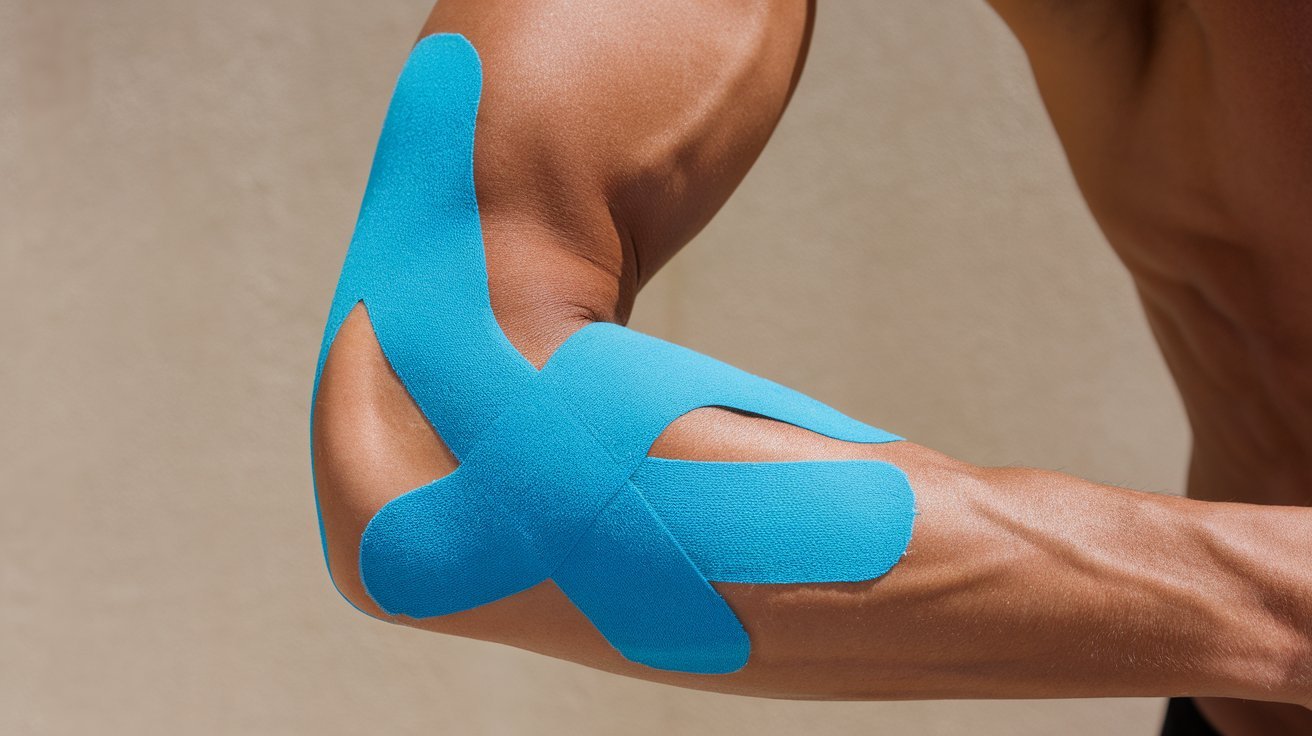
KT Tape for the elbow is a popular method of providing temporary support and sensory feedback around the elbow during exercise, work, sports, and everyday activities. Kinesiology tape is an elastic adhesive tape that can be placed over or around muscles and joints without substantially restricting normal movement.
People commonly search for KT Tape elbow when dealing with discomfort associated with activities such as tennis, weightlifting, repetitive computer work, throwing, or other movements involving repeated elbow use. Depending on where the discomfort originates, taping techniques may be used around the forearm muscles, outside or inside of the elbow, or along the upper arm.
However, tape should be viewed as a supportive tool rather than a cure. Persistent, severe, or worsening elbow symptoms may require assessment by a qualified healthcare professional. Correct application also matters because excessive tension, poor placement, or application to irritated skin can cause problems.
What Is KT Tape for the Elbow?
KT Tape is a brand of kinesiology tape, and the term is also commonly used informally to describe kinesiology-taping techniques. Unlike rigid athletic tape, kinesiology tape is designed to stretch and move with the body.
When applied around the elbow, the tape can provide proprioceptive feedback, meaning it gives the wearer greater awareness of movement and the taped area. It may also provide a feeling of support without immobilizing the elbow.
Elbow taping techniques vary depending on the purpose. A technique for discomfort on the outside of the elbow can differ substantially from one intended for symptoms around the inside of the elbow.
This distinction is important because elbow pain is not a single condition. Different problems can involve tendons, muscles, ligaments, nerves, joints, or referred symptoms from elsewhere.
For that reason, the best taping pattern depends on the location of symptoms, activity that aggravates them, and the underlying cause.
What Can KT Tape Elbow Taping Be Used For?
Kinesiology tape is frequently used around the elbow during activities involving repetitive gripping, lifting, throwing, or wrist movement. Common examples include tennis, golf, baseball, climbing, weight training, manual work, and repetitive computer use.
One frequently searched application is for tennis elbow, medically known as lateral elbow tendinopathy. This condition typically involves pain around the outside of the elbow and is associated with loading of the wrist-extensor tendon structures.
Another commonly discussed application is golfer’s elbow, or medial elbow tendinopathy, which involves discomfort around the inside of the elbow.
Tape may also be used as part of a broader rehabilitation program when an individual experiences muscular fatigue or wants additional awareness around the joint.
Importantly, kinesiology tape should not be assumed to correct the underlying tendon problem. Evidence regarding kinesiology tape varies depending on the condition and outcome being measured. It may provide short-term symptom relief or perceived support, but exercise rehabilitation and appropriate activity modification are often more important for persistent tendon problems.
How to Apply KT Tape to the Elbow
A general elbow taping process begins with clean, dry skin. Oils, lotions, and sweat can reduce adhesion, so the area should be clean before application.
For many elbow applications, we first identify the area where support or sensory feedback is desired. The tape is then measured and rounded at the corners to reduce premature peeling.
A commonly used approach for lateral elbow discomfort involves placing strips along the forearm extensor muscle region, with the tape extending toward or around the outside of the elbow. The exact tension and direction depend on the specific taping technique.
The basic process is:
- Clean and dry the skin.
- Measure the required tape length.
- Round the tape corners.
- Apply the anchor with little or no stretch.
- Position the elbow and forearm according to the chosen technique.
- Apply the working portion of the tape with the recommended tension.
- Rub the tape gently to activate the adhesive.
- Check that the tape does not create excessive pulling, numbness, tingling, or skin irritation.
We should remember that more stretch does not necessarily mean more support. Excessive tension can make the tape uncomfortable and may increase the risk of skin irritation.
The exact application should be matched to the condition being addressed rather than using one universal elbow taping pattern.
KT Tape for Tennis Elbow
Tennis elbow is one of the most common reasons people search for elbow kinesiology-taping instructions. Despite its name, it can occur in people who have never played tennis.
The condition is generally associated with pain and tenderness around the outer elbow, particularly when gripping, lifting, or repeatedly extending the wrist.
A taping strategy may focus on the muscles and tendons of the forearm rather than attempting to immobilize the elbow itself. This allows the wearer to maintain normal movement while receiving additional sensory feedback.
For sports or exercise, tape may be applied before activity and removed afterward. However, if pain consistently returns whenever the tape is removed, that is a reason to consider whether the underlying problem needs proper rehabilitation.
A comprehensive approach can include load management, progressive strengthening, technique modification, and gradual return to activity rather than depending solely on tape.
KT Tape for Golfer’s Elbow and Inside-Elbow Pain
Golfer’s elbow affects structures around the inside of the elbow and can be associated with repetitive gripping, wrist flexion, throwing, or other activities.
Because the symptomatic structures are located differently from tennis elbow, the taping direction is different as well. Applying a lateral-elbow technique to medial elbow symptoms may not provide the intended effect.
Before taping, we should identify whether discomfort is truly localized to the inner elbow. Symptoms such as numbness or tingling into the ring and little fingers can indicate irritation involving the ulnar nerve rather than a straightforward tendon problem.
In such situations, taping should not replace professional assessment, particularly when neurological symptoms persist or worsen.
Benefits and Limitations of KT Tape Elbow Support
One reason kinesiology tape remains popular is that it allows movement while providing a sensation of support. Rigid braces and athletic tape can restrict motion, whereas elastic kinesiology tape is designed to move with the body.
Potential advantages include:
- Lightweight support
- Greater awareness of the taped area
- Freedom of movement
- Convenient application during sports
- Potential short-term symptom relief
- Compatibility with exercise and rehabilitation programs
However, there are limitations. KT Tape does not automatically repair damaged tendons, restore strength, or correct poor movement mechanics.
The scientific evidence for kinesiology tape varies by condition and application. We should therefore regard it as a complementary strategy, not a substitute for appropriate diagnosis and rehabilitation.
People with adhesive allergies, sensitive skin, open wounds, infections, or significant skin irritation should avoid applying tape over affected areas.
Common KT Tape Elbow Mistakes to Avoid
Several simple mistakes can make an elbow taping application ineffective or uncomfortable.
The first is applying tape to wet, oily, or lotion-covered skin. This reduces adhesion and causes the tape to peel prematurely.
Another mistake is applying excessive tension. Kinesiology tape is elastic, but stretching every section aggressively can create unnecessary skin stress.
We should also avoid wrapping tape so tightly that it causes numbness, tingling, color changes, swelling, or increased discomfort.
Applying tape directly over irritated skin is another common problem. If significant itching, burning, redness, blistering, or rash develops, the tape should be removed.
Finally, we should not use tape to ignore serious symptoms. Increasing pain, substantial swelling, weakness, loss of motion, deformity, persistent numbness, or an injury caused by significant trauma deserves appropriate medical evaluation.
How Long Should KT Tape Stay on the Elbow?
The exact wear time depends on the product, skin sensitivity, activity, and application. Many kinesiology tapes are designed to remain in place for several days, but there is no requirement to keep tape on for a fixed period if the skin becomes irritated.
After showering or sweating, the tape should generally be dried rather than aggressively rubbed. Removing it slowly can help minimize skin irritation.
We should monitor the skin throughout the time the tape is worn. Comfort and skin health are more important than keeping the tape attached for a particular number of hours.
If the tape repeatedly causes irritation, another support strategy may be more appropriate.
Final Verdict: Is KT Tape for the Elbow Worth Using?
KT Tape elbow applications can be useful as a temporary supportive tool, particularly when we want lightweight support and freedom of movement during exercise or everyday activity. It may provide sensory feedback and, for some people, short-term relief from discomfort.
The key is to match the technique to the location and suspected cause of the symptoms. Tennis elbow and golfer’s elbow require different approaches, while nerve-related symptoms or significant injuries may require professional evaluation rather than taping.
For the best results, kinesiology tape should generally be considered part of a broader strategy that may include appropriate activity modification, progressive strengthening, mobility work, technique changes, and professional guidance when necessary.
Used correctly and comfortably, KT Tape can be a convenient addition to an elbow-support routine—but it should never be treated as a replacement for diagnosing and addressing the underlying problem.
Frequently Asked Questions
Does KT Tape help elbow pain?
It may provide temporary support, sensory feedback, or symptom relief for some people, although results vary and it does not necessarily correct the underlying cause.
Can we use KT Tape for tennis elbow?
Yes, kinesiology tape is commonly used around the outer elbow and forearm for tennis-elbow symptoms. It should be combined with appropriate rehabilitation rather than used as the only treatment.
Can KT Tape be used for golfer’s elbow?
Yes. The application is different because golfer’s elbow involves structures around the inside of the elbow.
How tight should KT Tape be?
It should generally feel supportive rather than painfully tight. Excessive tension can cause discomfort and skin irritation.
Can we sleep with KT Tape on the elbow?
If the tape is comfortable and the skin is healthy, some products can remain on for extended periods. However, it should be removed if it causes itching, burning, rash, numbness, or other irritation.
Can KT Tape cure tennis elbow?
No. Tape may help manage symptoms, but persistent tennis elbow generally requires attention to load management and progressive rehabilitation.
When should elbow pain be checked by a professional?
Professional assessment is appropriate for severe or persistent pain, major swelling, weakness, restricted movement, deformity, significant trauma, or persistent numbness and tingling.

Do You Want Pain? Meaning, Context, Uses, and What the Phrase Can Refer To

2025 INEOS Grenadier Station Wagon: Complete Guide to Specs, Performance, Off-Road Capability, and Features

Cuisinart Grind and Brew Single Serve: Complete 2026 Guide

Playing Game Site PlayBattleSquare (2026): Complete Guide to Features, Gameplay, Community, and Gaming Experience

Is Mychael Schnell Married? (2026) Everything We Know About the Journalist’s Personal Life, Career, and Background

Isaac Ortega: Biography, Career, Achievements, and Growing Influence
 Gaming2 months ago
Playing Game Site PlayBattleSquare (2026): Complete Guide to Features, Gameplay, Community, and Gaming Experience
- Celebrity2 months ago
Is Mychael Schnell Married? (2026) Everything We Know About the Journalist’s Personal Life, Career, and Background
- Celebrity2 months ago
Isaac Ortega: Biography, Career, Achievements, and Growing Influence
- Blog2 months ago
The #Thriftyevents.net: A Complete Guide to Affordable Event Planning and Budget-Friendly Celebrations in 2026
- Technology2 months ago
Slylar Box: A Complete Guide to Features, Benefits, Uses, and What You Should Know
- Entertainment2 months ago
Buffstreams: Everything You Need to Know About the Popular Sports Streaming Platform
- Fashion2 months ago
www.redandwhitemagzcom: A Complete Guide to the Digital Magazine Platform in 2026
- Food2 months ago
Best Calçots with Romesco Near Me: The Ultimate 2026 Guide to Finding Authentic Catalan Grilled Onions