Blog
Intermatic Incorporated Timer Switch: Complete 2026 Guide

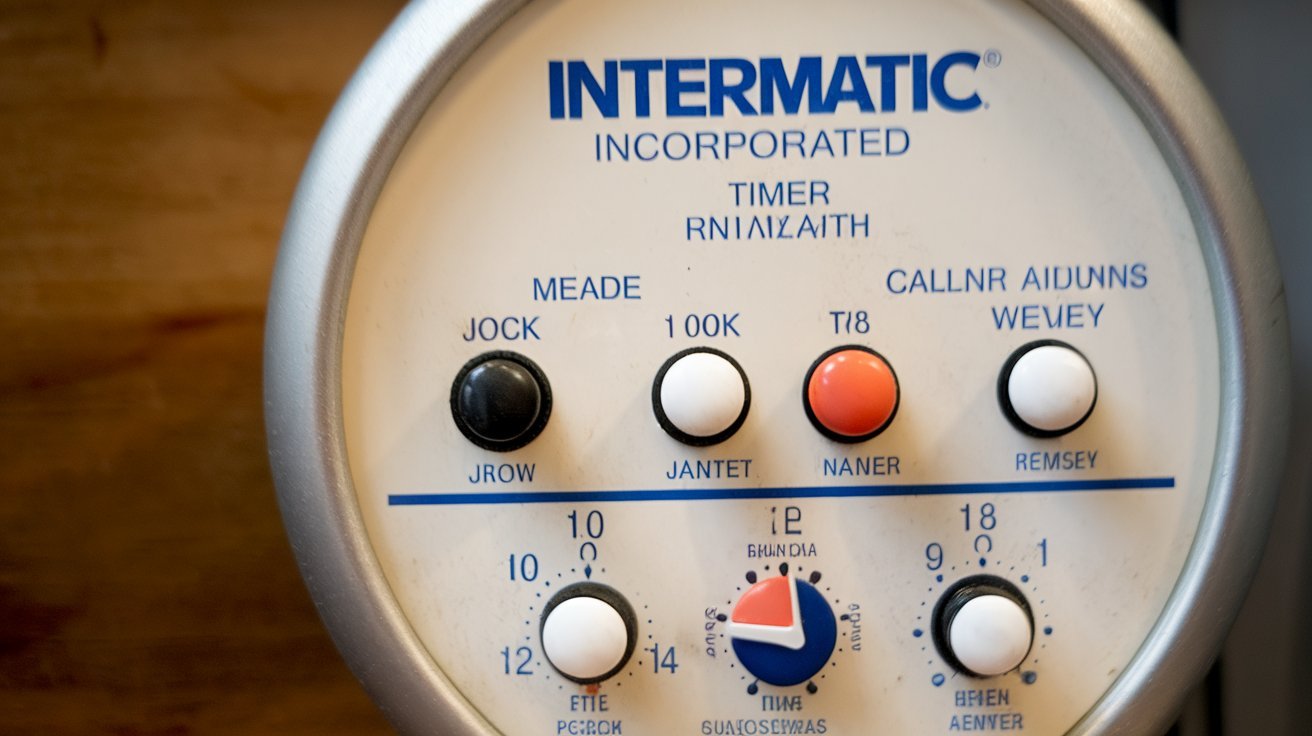
The Intermatic incorporated timer switch is a popular solution for automatically controlling lights, appliances, pumps, HVAC equipment, and other electrical loads according to a schedule. Intermatic has developed a broad range of mechanical, digital, programmable, countdown, and in-wall timer switches, making the brand useful for both residential and commercial applications.
Whether you are replacing a traditional wall switch or installing a dedicated time switch for a pool pump or outdoor lighting system, choosing the correct Intermatic model depends on the voltage, load type, switching configuration, installation location, and scheduling requirements. In 2026, Intermatic’s lineup still includes simple mechanical timers alongside advanced digital models with features such as astronomical scheduling and automatic daylight-saving adjustment.
What Is an Intermatic Timer Switch?
An Intermatic timer switch is an electrical control device that automatically turns a connected load ON or OFF at predetermined times. Instead of manually operating a switch every day, the timer follows a programmed schedule.
Intermatic offers several different timer technologies. Its T100 Series mechanical time switches, for example, are designed for 24-hour operation and use physical ON/OFF trippers to control loads. The T101 is a 120 VAC SPST model that provides up to 12 ON/OFF operations per day, with a minimum ON/OFF interval of one hour.
Digital models provide considerably more flexibility. The Intermatic ST01, for example, is a 7-day programmable in-wall timer capable of handling up to 40 ON/OFF events, while also offering astronomical clock functionality, automatic daylight-saving adjustment, and random operation.
Popular Intermatic Timer Switch Types
One of the biggest advantages of the Intermatic range is the variety of available timer designs. The right choice depends on what you need the timer to accomplish.
Mechanical Timer Switches
Mechanical models are known for their simple operation and durable design. The T100 family is commonly used for pool equipment, outdoor lighting, HVAC applications, and general load control. Users position trippers around a rotating dial to establish when the connected equipment switches on and off.
The T101 is one example. It operates on 120 VAC, 60 Hz and has a one-hour minimum ON/OFF interval. It also provides manual override, allowing the user to control the connected load without completely removing the programmed schedule.
Digital Programmable Timers
Digital timers are better suited to people who need different schedules throughout the week. The ST01 can create multiple ON/OFF events and automatically calculate sunrise and sunset through its astronomical clock feature.
These models are especially useful for security lighting, exterior lights, signs, and energy-management applications, where the required schedule can change from one day to another.
Countdown Timers
Intermatic also produces spring-wound countdown timers. Instead of programming a specific daily schedule, a countdown timer can operate a load for a selected period and then automatically switch it off. The FF6H, for example, is a six-hour SPST countdown timer designed for applications including lighting, ventilation, motor control, and other loads.
Key Features to Look For in 2026
When choosing an Intermatic incorporated timer switch, checking the technical specifications is more important than simply choosing the newest-looking model.
First, check the input voltage. Intermatic offers timers for different electrical systems, including 120 VAC, 208–277 VAC, and other voltage ranges. Its mechanical timer category demonstrates how widely these specifications vary between models.
Next, consider the switch configuration. SPST, SPDT, DPST, and other configurations are intended for different electrical applications. A timer designed for one circuit arrangement should not automatically be substituted for another model.
The load rating is equally important. Motors, pumps, lighting systems, and other equipment can have different electrical characteristics. The T101, for example, is rated for several load types and provides manual override functionality.
For digital wall timers, features such as 7-day scheduling, astronomical control, daylight-saving adjustment, random mode, and battery backup can make everyday operation much easier. The ST01/EI600 family includes these capabilities, with newer versions also incorporating updated setup functions and optional countdown operation.
Installation and Wiring Considerations
Installing an Intermatic timer switch requires careful attention to electrical safety. Power should be disconnected at the circuit breaker before wiring, and a voltage tester should be used to verify that the circuit is actually de-energized. Intermatic specifically provides this warning in its installation guidance.
Installation requirements vary considerably by model. Some in-wall timers replace an ordinary wall switch, while larger mechanical time switches may be mounted in a dedicated enclosure.
For example, Intermatic’s ST01/EI600 installation instructions describe single-pole and three-way applications. In three-way installations, the timer needs to be installed on the appropriate line-side box, rather than simply being placed in whichever box is most convenient.
Some digital Intermatic timers can operate without a neutral connection, which can make retrofitting easier in compatible installations. However, that does not mean every Intermatic timer can be wired without a neutral. Always follow the wiring diagram for the exact model.
If the circuit configuration or conductors are unclear, using a qualified electrician is the safest approach.
How to Program an Intermatic Timer Switch
Programming depends on the specific model. A mechanical timer generally requires setting the current time on the dial and positioning the appropriate ON and OFF trippers.
The T100 series, for example, uses a rotating dial and physical trippers. After installation, the dial should advance correctly, and the current time must be aligned before the switching schedule is established.
Digital models use a display and programming buttons. The user typically sets the current date and time, establishes the desired ON/OFF events, and then places the device into automatic operation.
Some newer ST01 and EI600 models released from 2023 onward have updated menus that include latitude and longitude entry, language selection, and an optional countdown function. These features support more advanced astronomical scheduling.
Common Uses for Intermatic Timer Switches
An Intermatic incorporated timer switch can be useful in many situations.
Outdoor lighting is one of the most obvious applications. A timer can automatically turn lights on during the evening and off later at night, reducing the need for daily manual operation.
Pool pumps are another important application, particularly for Intermatic’s mechanical time-switch family. A properly selected timer can establish regular operating periods while providing manual control when necessary.
Timers can also be used for indoor lighting, HVAC equipment, ventilation, signs, motors, and other electrical loads, provided the selected timer has the correct electrical rating and switching configuration.
For businesses, automatic scheduling can help create consistent operating routines. At home, it can improve convenience and help prevent lights or equipment from being left running unnecessarily.
Frequently Asked Questions
Is Intermatic a good timer switch brand?
Intermatic is an established manufacturer of electrical timing and control products, with mechanical and electronic timer options covering residential and commercial applications. Its product range includes simple mechanical switches as well as sophisticated digital programmable timers.
What is the difference between a mechanical and digital Intermatic timer?
A mechanical timer generally uses a rotating dial and physical trippers, while a digital timer uses electronic programming. Mechanical models are straightforward, while digital models can provide more flexible schedules and features such as astronomical control.
Can an Intermatic timer replace a normal light switch?
Some Intermatic in-wall timers are specifically designed to replace standard wall switches. However, compatibility depends on voltage, wiring configuration, load type, and the exact timer model.
Does every Intermatic timer need a neutral wire?
No. Certain models, including compatible ST01/EI600 timers, are designed without a neutral connection. Other Intermatic models have different wiring requirements, so the individual installation instructions should always be checked.
How many events can an Intermatic digital timer handle?
The ST01 is designed for up to 40 ON/OFF events across a seven-day schedule, giving it considerably more flexibility than a basic mechanical timer.
Conclusion
The Intermatic incorporated timer switch remains a practical choice in 2026 for automating electrical equipment and lighting. The company’s range covers everything from straightforward 24-hour mechanical timers to sophisticated 7-day digital programmable switches with astronomical scheduling and other advanced functions.
For a simple daily schedule, a mechanical model such as the T101 can provide dependable control. For changing weekly schedules, outdoor lighting, or more advanced automation, a digital model such as the ST01 may be more appropriate. Countdown timers offer another solution when equipment only needs to remain active for a predetermined period.
The most important step is selecting a timer that matches the voltage, load, wiring configuration, and intended application. Once the correct model is chosen and installed according to Intermatic’s instructions, a timer switch can provide convenient, repeatable, and automatic control for many years.
The word Uncuymaza has become an increasingly curious search term in 2026. People encountering it online may find explanations connecting it with Andean culture, Quechua language, art, spirituality, food, creativity, technology, or digital culture. The difficulty is that these explanations do not consistently agree with one another.
When we investigate an unfamiliar term, we need to distinguish between what can actually be established and what has simply been repeated online. Current search results show that Uncuymaza does not have one universally accepted definition or firmly documented historical origin. Several websites acknowledge this uncertainty, while others present specific cultural explanations without providing enough evidence to establish them as fact.
At the same time, Uncuymaza has a clearly identifiable modern online use: uncuymaza.com presents itself as a general digital publishing platform covering technology, lifestyle, entertainment, guides, trends, and general information.
What Is Uncuymaza?
The safest description of Uncuymaza in 2026 is that it is an uncommon and emerging online term with an uncertain broader meaning.
Unlike an established English word, Uncuymaza does not currently have a definition that can be confidently applied in every context. Different websites use the term in different ways. Some describe it as a symbolic or creative concept, while others associate it with cultural traditions or modern digital media.
This makes the word unusual but also explains why so many people are searching for it. When readers encounter an unfamiliar expression, they naturally want to know whether it is a place, cultural term, philosophy, brand, website, artistic movement, or newly coined word.
In practical online usage, one of the clearest current references is the Uncuymaza website, which describes itself as a digital destination offering informative content across multiple subjects. Its stated focus includes useful guides, trending topics, entertainment, technology, lifestyle, and online trends.
Therefore, when we encounter the word today, context matters considerably.
Does Uncuymaza Have a Confirmed Historical Origin?
One of the most important questions surrounding Uncuymaza is its origin. At present, there is insufficient reliable evidence to establish a single historical explanation.
Some online articles suggest that the word has an Andean or Quechua connection and associate it with concepts such as harmony, nature, community, and balance. Other pages suggest artistic, spiritual, culinary, or technological interpretations. However, the existence of multiple competing explanations does not prove that any particular interpretation is historically authentic.
We should therefore avoid presenting an uncertain etymology as established history.
A genuine historical linguistic claim normally benefits from evidence such as dictionary records, historical texts, academic linguistic research, archival material, documented usage, or testimony from relevant language communities. Without that type of evidence, an attractive explanation remains a possibility rather than a confirmed fact.
This distinction is particularly important for Uncuymaza because some recent pages confidently assign the term a cultural history while other investigations conclude that its origin cannot currently be verified.
Why Are There So Many Different Meanings of Uncuymaza?
The unusual number of interpretations is one of the most interesting aspects of the Uncuymaza phenomenon.
A search can produce descriptions involving culture, nature, community, spirituality, art, design, food, technology, artificial intelligence, and digital publishing. These subjects are so different that they cannot all represent one established definition.
One explanation is that the term is new or poorly documented, allowing writers to interpret it freely. Another possibility is that different websites have repeated or expanded upon earlier online claims without independently verifying their sources.
There is also a broader digital phenomenon involved. Unfamiliar keywords can attract attention precisely because people want an explanation. Once several articles begin discussing the same term, additional pages may appear, each attempting to provide a more detailed definition.
Some 2026 investigations have even characterized Uncuymaza as a possible internet-created or AI-associated term, but this remains an unconfirmed theory rather than an established origin. No definitive creation record, original prompt, or documented creator has been publicly established in the sources reviewed.
For that reason, we should treat both the cultural-origin theory and the AI-origin theory cautiously.
Uncuymaza as a Modern Digital Platform
One aspect of Uncuymaza that can be described more directly is its use as a website and digital publishing identity.
The official Uncuymaza website describes itself as an online platform intended to provide informative, accessible, and engaging content. Its stated categories span subjects such as technology, lifestyle, entertainment, guides, business, and current online trends.
Its About Us page further describes Uncuymaza as a growing platform involving writers, researchers, and content creators, with an emphasis on practical and user-friendly information.
This modern use is important because it gives the word a concrete contemporary identity even though its deeper etymology remains uncertain.
We can therefore distinguish between two questions:
- What is Uncuymaza used for online today? It is associated with a digital publishing platform and online content.
- What did the word originally mean? That remains uncertain and should not be presented as settled history.
This distinction provides a much clearer understanding of the term.
Is Uncuymaza a Quechua or Andean Word?
Claims connecting Uncuymaza with Quechua or Andean culture should be approached carefully.
Several online articles make cultural associations, sometimes describing Uncuymaza as a concept involving balance, community, nature, identity, or harmony. Such descriptions may sound plausible because they resemble themes found in discussions of Andean cultures, but plausibility is not the same as linguistic evidence.
Some other investigations specifically report that they could not verify the word through commonly available linguistic and cultural references.
Consequently, we should not state categorically that Uncuymaza is an ancient Quechua word unless stronger primary evidence becomes available.
It is entirely possible for a newly created term to resemble the sound or structure of an existing language. It is also possible for an informal expression to circulate without appearing in major reference works. Neither possibility, however, provides sufficient evidence for a historical claim.
The most responsible position in 2026 is therefore that the Quechua or Andean origin remains unverified.
Why Is Uncuymaza Trending Online?
The growing interest in Uncuymaza can be understood through its unusual combination of mystery, unfamiliar spelling, competing explanations, and online repetition.
People generally search unfamiliar words because they want a simple answer. With Uncuymaza, however, the search results themselves create additional questions. One page may describe it as a cultural concept, another as a creative idea, and another as a digital platform.
That disagreement naturally encourages further searches.
The term also illustrates how modern internet language can develop. A brand name, username, website title, fictional expression, AI-generated phrase, or creative project name can potentially become recognizable after being repeated across online communities.
In this case, the available evidence does not establish one definitive explanation for the word’s rise. What we can say with greater confidence is that Uncuymaza has developed a noticeable online presence during 2026, particularly through articles attempting to explain its meaning and origin.
How Should We Understand Uncuymaza in 2026?
The best approach is to regard Uncuymaza as an emerging online term whose meaning depends heavily on context.
If we encounter it in connection with the Uncuymaza website, it refers to a modern digital publishing identity. If we see it in an article discussing culture or creativity, the writer may be using it as a conceptual term. If we see claims about ancient origins, we should look for independent historical or linguistic evidence before accepting them.
The key lesson is that repetition does not automatically create historical evidence. A claim appearing on many websites can still originate from one unsourced article or an earlier speculative interpretation.
For readers, researchers, writers, and content creators, this makes source evaluation especially important. We should distinguish clearly between documented facts, current online usage, possible interpretations, and speculation.
Frequently Asked Questions About Uncuymaza
What does Uncuymaza mean?
There is currently no universally confirmed definition. It is an uncommon online term with several competing interpretations.
Is Uncuymaza a real word?
The term is certainly being used online, including as the name of a digital platform. However, its broader linguistic or historical status remains uncertain.
Is Uncuymaza an ancient Quechua word?
There is not enough reliable evidence to establish this claim. Online sources make the association, but stronger linguistic or historical documentation would be needed.
Is Uncuymaza a website?
Yes. uncuymaza.com presents itself as a general-interest digital content platform covering areas such as technology, lifestyle, entertainment, guides, and trends.
Why are people searching for Uncuymaza?
Its unusual spelling and the conflicting explanations surrounding its meaning and origin have generated curiosity and additional online searches.
Final Thoughts on Uncuymaza
Uncuymaza is an excellent example of how a mysterious online term can develop a surprisingly large digital footprint before its origin and meaning are fully established. In 2026, we can confidently identify Uncuymaza as an emerging online name and digital publishing identity, but we should remain cautious about claims assigning it a specific ancient, linguistic, or cultural origin.
The most accurate understanding is therefore not to force Uncuymaza into one definition. Instead, we should examine how the term is being used, who is using it, what evidence supports the claim, and whether the source can be independently verified.
As more historical records, creator information, linguistic research, or primary documentation become available, the story behind Uncuymaza may become clearer. Until then, separating verified online usage from speculation provides the most reliable way to understand this unusual and increasingly searched term.
Have you ever looked at your full name and wondered, “How many of me are there?” It is a simple question, but the answer can reveal interesting information about names, population patterns, identity, and family history.
A name that seems unique within a small community may actually belong to thousands of people across a country. Conversely, a familiar first name combined with a rare surname can create a remarkably uncommon full-name combination.
Online name-search services such as HowManyofMe were created to help people explore this question. By entering a first name and last name, users can obtain an estimate of how many people may share the same name. In 2026, these tools remain interesting resources for curiosity and preliminary demographic research, provided we understand their limitations.
What Does “How Many of Me Are There” Mean?
The question “How many of me are there?” usually means how many other people share your first and last name.
It is different from asking how many people have your first name. For example, thousands or millions of people might have a popular first name, but far fewer may share the exact combination of that first name and a particular surname.
Consider a hypothetical name such as James Wilson. James may be common, and Wilson may also be common. When the two are combined, however, the number of people with exactly the same name becomes a separate statistical question.
This is why full-name searches can be fascinating. They help us move beyond general name popularity and examine the potential uniqueness of an individual’s complete name.
The answer is generally expressed as an estimate, not a guaranteed count of every person currently living with that name.
How Can We Find Out How Many People Share Our Name?
A How Many of Me style search normally requires only two basic details:
- First name
- Last name
After entering the information, the service uses available demographic and name-frequency data to estimate how many individuals could have the same name.
The calculation is based on probability and population statistics. If a first name occurs frequently and the surname is also widespread, the likelihood of numerous matching combinations is higher.
If both names are relatively rare, the estimated number can be much smaller.
For example, a common first name paired with a common surname may produce a large estimate. An unusual first name combined with an uncommon surname may produce a result suggesting that very few people share the complete name.
This makes name calculators useful for exploring name popularity and uniqueness without requiring users to search through thousands of individual records.
Why Are Some Names More Common Than Others?
The number of people sharing a name depends on many historical and demographic factors.
First-name popularity can change over time. Names may become popular because of cultural traditions, historical figures, celebrities, entertainment, literature, religion, or changing social preferences. Some names remain popular for generations, while others become less common after a particular period.
Surnames have different origins. They can come from occupations, geographical locations, ancestral names, personal characteristics, languages, and historical communities. Migration has also caused surnames to spread across countries and continents.
Geography can therefore have a significant effect on name frequency. A surname that is unusual in one region may be relatively common in another.
The combination of first name and surname is especially important. A person can have a very common first name but still have a rare full name because the surname is unusual.
Likewise, someone with a moderately common first name and a highly common surname may discover that many other people have the same complete name.
How Accurate Is a “How Many of Me” Result?
The most important limitation is that a name-search result is generally a statistical estimate.
It should not be interpreted as a live census containing every person who currently has the name.
Population information changes constantly. People are born, die, move between countries, marry, legally change their names, and sometimes use different versions of their names. Historical datasets may therefore produce estimates that differ from current population conditions.
Spelling is another important factor. Two surnames can have similar origins but different spellings, and databases may treat them as separate names.
Names can also be recorded differently depending on the source. A person may use a middle name, nickname, shortened form, or alternative spelling in everyday life.
Because of these factors, no single name calculator should be treated as an exact population count. Instead, the result is most useful as an indication of whether a particular name combination is relatively common or uncommon.
Can Sharing a Name Tell Us Who Someone Is?
Finding another person with the same name can be interesting, but a matching name does not establish someone’s identity or family relationship.
This is particularly important when researching genealogy.
Suppose two people have the same first name and surname. They could be relatives, but they could also have completely unrelated family histories. A common surname may have developed independently among many different families.
To establish a family connection, researchers generally need additional evidence such as birth records, marriage records, census documents, immigration records, historical newspapers, family archives, or genealogy research.
A name-frequency tool can therefore be considered a starting point rather than proof.
The same principle applies when trying to identify another person online. A name match alone is not enough to determine that two records refer to the same individual.
How Name Searches Can Help With Genealogy and Research
One useful application of How Many of Me searches is genealogy.
Researchers may discover that a surname is extremely common, which can explain why finding the correct historical family record is difficult. Alternatively, an uncommon surname can provide a useful starting point for investigating historical documents.
Name-frequency information can also help researchers understand population and naming trends.
For example, a researcher studying immigration might investigate how a surname became more prevalent in a particular country. Someone studying cultural history could examine how first-name popularity changed across generations.
Students can also use name statistics for demographic projects, while writers may use them when creating realistic fictional characters.
However, name frequency should always be combined with other evidence when conducting serious research.
How to Interpret Your Results in 2026
When we search for how many of me are there, the number itself is only part of the answer.
A high estimate generally suggests that the first name and surname combination is relatively common within the population represented by the underlying data. A low estimate suggests that the combination is comparatively unusual.
Neither result necessarily tells us the exact number of people living with that name today.
For more detailed research, we can compare name-search estimates with government demographic information, census records, genealogy databases, historical documents, and other reputable statistical sources.
It is also important to consider the date of the information. A name’s popularity can change substantially over decades, and population movement can alter the geographic distribution of surnames.
The best interpretation is therefore: the result provides statistical context, not definitive proof.
Why Asking “How Many of Me Are There?” Is So Interesting
The question may begin as simple curiosity, but it highlights an important aspect of personal identity.
Most of us encounter only a limited number of people during everyday life. Because of that, a name can feel unique simply because we have not met many people who share it.
The internet provides a much larger view. A name that seems rare locally can turn out to be common nationally, while an unusual combination may genuinely be shared by relatively few people.
This makes name-frequency searches entertaining, educational, and potentially useful for research.
At the same time, we should remember that every matching name belongs to a different person with a different life story. Statistical similarity does not mean personal similarity.
Final Thoughts: How Many of Me Are There?
How many of me are there? is a fascinating question that can be explored through online name-frequency calculators and demographic resources.
A first-and-last-name search can provide an estimate of how many people may share a particular name, helping us understand name popularity, uniqueness, demographic patterns, and family-history possibilities.
The key is to interpret the result correctly. A name-search number is an estimate rather than an exact real-time census. Differences in population data, spelling, migration, name changes, and data sources can all affect the result.
For casual curiosity, exploring the frequency of our name can be surprisingly enjoyable. For genealogy and serious research, the result can serve as a starting point that should be supplemented with reliable historical and demographic records.
Ultimately, discovering how many people share our name reminds us that a name can be common or rare, but the individual behind that name is always unique.

What Are Wollmatten?
Wollmatten is a German term generally understood to mean wool mats. The singular form is commonly written as Wollmatte, while Wollmatten refers to multiple wool mats. The word itself does not identify one particular brand, patented product, standardized design, or single application. Instead, it can describe a broad group of mats made entirely or partly from wool and designed for different purposes.
This broad definition explains why searches for Wollmatten can produce surprisingly different results. One product may be a soft floor covering, another may be a dense felt pad, and another may be manufactured for building insulation, sound control, gardening, furniture protection, yoga, meditation, or crafts. The material, thickness, density, construction, backing, and intended purpose determine how a particular Wollmatte performs.
In most cases, wool mats are associated with sheep’s wool, although the exact composition varies between products. Some are made predominantly from natural wool, while others contain additional natural or synthetic fibers, adhesives, dyes, backing materials, or protective treatments. Therefore, the name Wollmatten alone does not guarantee that a product contains 100% wool.
What Does the Word Wollmatten Mean?
Understanding the language behind Wollmatten makes the term much easier to understand. The German word Wolle means wool, while Matte means mat. Matten is the plural form, giving the basic meaning of wool mats. In practical English, therefore, Wollmatten can simply be translated as wool mats.
The important point is that this is a descriptive term, not necessarily a product name. A manufacturer, retailer, interior designer, craft supplier, or insulation company may use a variation of the concept to describe a wool-based mat designed for a particular purpose. Consequently, two products carrying the same general description can have very different specifications.
This is particularly important when shopping online. A person searching for a comfortable wool floor mat could encounter an insulation product because both can reasonably be described as wool mats. Checking the product category, dimensions, fiber content, density, backing, and intended application is therefore more useful than relying on the word alone.
Main Types and Uses of Wollmatten
One of the most interesting things about Wollmatten is the variety of products that can fall under this general category. Decorative and floor mats are among the most familiar. These products can add warmth, texture, cushioning, and visual character to bedrooms, living rooms, offices, and other indoor spaces. Wool has long been used for carpets and interior textiles because of characteristics such as comfort, resilience, and insulation.
Another category includes yoga and meditation mats. Wool-based surfaces can provide warmth and cushioning for practices where a person spends extended periods sitting, kneeling, or lying on the floor. Some specialized products use thicker wool or felted construction, while others combine wool with a separate non-slip backing.
Wool can also be processed into technical mats and insulation materials. Dense wool-based products can be used in building applications where thermal or acoustic properties are important. These products should not be confused with decorative household mats because their density, fire performance, dimensions, installation method, and certification requirements can be substantially different.
Other applications include furniture protection, crafts, gardening, pet surfaces, acoustic treatments, and specialized padding. Some garden products use wool-based materials around plants or soil, while craft applications may use felted wool sheets that can be cut and shaped.
Benefits of Wool Mats
The appeal of Wollmatten comes largely from the natural characteristics of wool. Wool fibers have a complex structure that can provide a combination of warmth, resilience, cushioning, and moisture interaction. When processed into a mat, these characteristics can contribute to a comfortable surface and, depending on the construction, useful insulation or acoustic performance.
For interior use, wool mats can create a warm and comfortable feeling underfoot. A thick mat can also provide cushioning over a hard floor and introduce additional texture into a room. Wool’s resilience can help some products maintain their shape and appearance over time, although durability depends heavily on the quality and construction of the individual mat.
Wool can also contribute to sound absorption when it is incorporated into suitable dense or fibrous materials. This makes certain wool-based mats useful in environments where reducing echoes or controlling sound is desirable.
Another potential advantage is the material’s renewable natural origin. Sheep produce new wool, making wool different from petroleum-based synthetic fibers in terms of its source. However, the overall environmental impact of a finished Wollmatte depends on farming, processing, transportation, dyes, backing materials, treatments, and eventual disposal. A product should therefore not automatically be considered environmentally superior simply because it contains wool.
Limitations and Things to Consider
Although Wollmatten have useful properties, they are not automatically suitable for every situation. Wool mats can vary considerably in price, weight, thickness, density, and maintenance requirements. A thick wool mat may provide excellent cushioning but can be heavier and more difficult to move than a thin felt product.
Moisture and cleaning also require attention. Wool can interact with moisture, but that does not mean every wool mat should be soaked or machine-washed. Some products are specifically designed to resist moisture, while others can shrink, distort, felt, or otherwise change if exposed to inappropriate washing conditions. Care instructions supplied with the particular product should take priority.
Another consideration is allergy and sensitivity. Marketing descriptions sometimes make broad claims that wool products are universally hypoallergenic, but individual reactions can vary. A person with a known sensitivity should examine the full material composition, including dyes, finishes, adhesives, backing materials, and other fibers.
Buyers should also check whether a product is pure wool or a blend. A wool-looking mat may contain only a portion of wool. The backing may be made from rubber, latex, polyurethane, synthetic textile, or another material. The exact construction can significantly influence durability, cleaning, recyclability, and environmental characteristics.
How to Choose the Right Wollmatte
The best Wollmatte depends on the job it needs to perform. Start by identifying the intended application. A decorative floor mat requires different characteristics from a building insulation mat, while a yoga mat needs different properties from a garden cover.
Next, examine the fiber composition. If natural wool is important to you, look for clear information about the percentage of wool and whether other fibers or backing materials are present. Then consider thickness and density. A thicker mat may provide greater cushioning, while a denser material can be better suited to protective or technical applications.
For flooring, check whether the mat has a stable or non-slip backing and whether it is compatible with your floor type. For insulation, look for technical specifications and appropriate certifications rather than relying solely on general statements about wool’s natural insulating ability.
Dimensions also matter. A small felt pad may be appropriate for furniture, while a full-length mat could be designed for yoga or floor coverage. If the product will be exposed to sunlight, moisture, heat, pets, children, or heavy traffic, those conditions should be considered before purchase.
Finally, read the care instructions and warranty information. These details can reveal how the manufacturer expects the product to be used and maintained.
Care, Maintenance and Sustainability of Wollmatten
Proper maintenance can help a wool mat remain attractive and functional for longer. For many indoor products, regular gentle vacuuming can remove loose dust and debris. Spills should generally be addressed according to the manufacturer’s instructions rather than aggressively rubbing or saturating the material.
Some wool products can be professionally cleaned, while others require specialized treatment. Excessive heat, harsh chemicals, and inappropriate washing methods can damage wool fibers or alter the structure of the mat. Always follow the care label for the exact product.
From a sustainability perspective, wool has several characteristics that make it attractive to consumers seeking natural materials. Wool is a renewable animal fiber and, under appropriate conditions, natural wool can biodegrade. However, a complete sustainability assessment must include the entire product rather than just the primary fiber. Blended fibers, synthetic backings, chemical treatments, transportation, and manufacturing processes can all affect environmental performance.
For buyers who prioritize sustainability, look for transparent material information, responsible sourcing information, relevant certifications, durable construction, and repairable or recyclable designs where available.
Frequently Asked Questions About Wollmatten
What does Wollmatten mean?
Wollmatten is a German term generally meaning wool mats. Wollmatte is the singular form, while Wollmatten refers to multiple mats.
Are Wollmatten always made from 100% wool?
No. Some products are primarily or entirely wool, while others contain synthetic fibers, additional natural fibers, backing materials, dyes, adhesives, or coatings. Always check the material specification.
What are Wollmatten used for?
Depending on the design, they can be used as floor coverings, yoga or meditation mats, protective pads, acoustic materials, insulation, garden covers, furniture protection, and craft materials.
Are Wollmatten good for insulation?
Certain wool-based mats are specifically manufactured for thermal or acoustic insulation, but a decorative wool mat should not automatically be treated as building insulation. Technical specifications and certifications are important for construction applications.
Are Wollmatten environmentally friendly?
Wool is a renewable natural fiber, and untreated wool can biodegrade under suitable conditions. However, the environmental profile of a finished product depends on its complete material composition, manufacturing process, treatments, transportation, and disposal.
Can Wollmatten be washed?
Cleaning requirements vary significantly. Some wool mats require gentle spot cleaning or professional cleaning rather than conventional washing. The manufacturer’s care instructions should always be followed.
Conclusion
Wollmatten simply means wool mats, but the term represents a surprisingly broad range of products. Depending on its construction, a Wollmatte can function as a comfortable floor covering, decorative textile, yoga surface, furniture pad, garden material, acoustic product, or specialized insulation mat.
The most important lesson is that the word alone does not tell you what a particular Wollmatte can do. Material composition, thickness, density, manufacturing method, backing, treatment, dimensions, and intended application all matter. A soft decorative mat and an engineered insulation mat may both contain wool while serving completely different purposes.
For anyone researching Wollmatten in 2026, the smartest approach is to begin with the intended use and then examine the product specifications carefully. With the right construction and application, wool mats can combine natural material characteristics with practical comfort, insulation, protection, and decorative appeal.

Sosoactive: Meaning, Uses, Features, and What We Know in 2026

Uncuymaza: Meaning, Origin, Uses, and What We Know in 2026

Masgonzola: What It Is, Taste, Uses, and Complete Cheese Guide 2026

Playing Game Site PlayBattleSquare (2026): Complete Guide to Features, Gameplay, Community, and Gaming Experience

Is Mychael Schnell Married? (2026) Everything We Know About the Journalist’s Personal Life, Career, and Background

Isaac Ortega: Biography, Career, Achievements, and Growing Influence
 Gaming3 months ago
Playing Game Site PlayBattleSquare (2026): Complete Guide to Features, Gameplay, Community, and Gaming Experience
- Celebrity3 months ago
Is Mychael Schnell Married? (2026) Everything We Know About the Journalist’s Personal Life, Career, and Background
- Celebrity3 months ago
Isaac Ortega: Biography, Career, Achievements, and Growing Influence
- Blog3 months ago
The #Thriftyevents.net: A Complete Guide to Affordable Event Planning and Budget-Friendly Celebrations in 2026
- Technology3 months ago
Slylar Box: A Complete Guide to Features, Benefits, Uses, and What You Should Know
- Food2 months ago
Best Calçots with Romesco Near Me: The Ultimate 2026 Guide to Finding Authentic Catalan Grilled Onions
- Entertainment3 months ago
Buffstreams: Everything You Need to Know About the Popular Sports Streaming Platform
- Fashion3 months ago
www.redandwhitemagzcom: A Complete Guide to the Digital Magazine Platform in 2026