History
Robert E. Lee Biography: Civil War, Life and Legacy (2026)

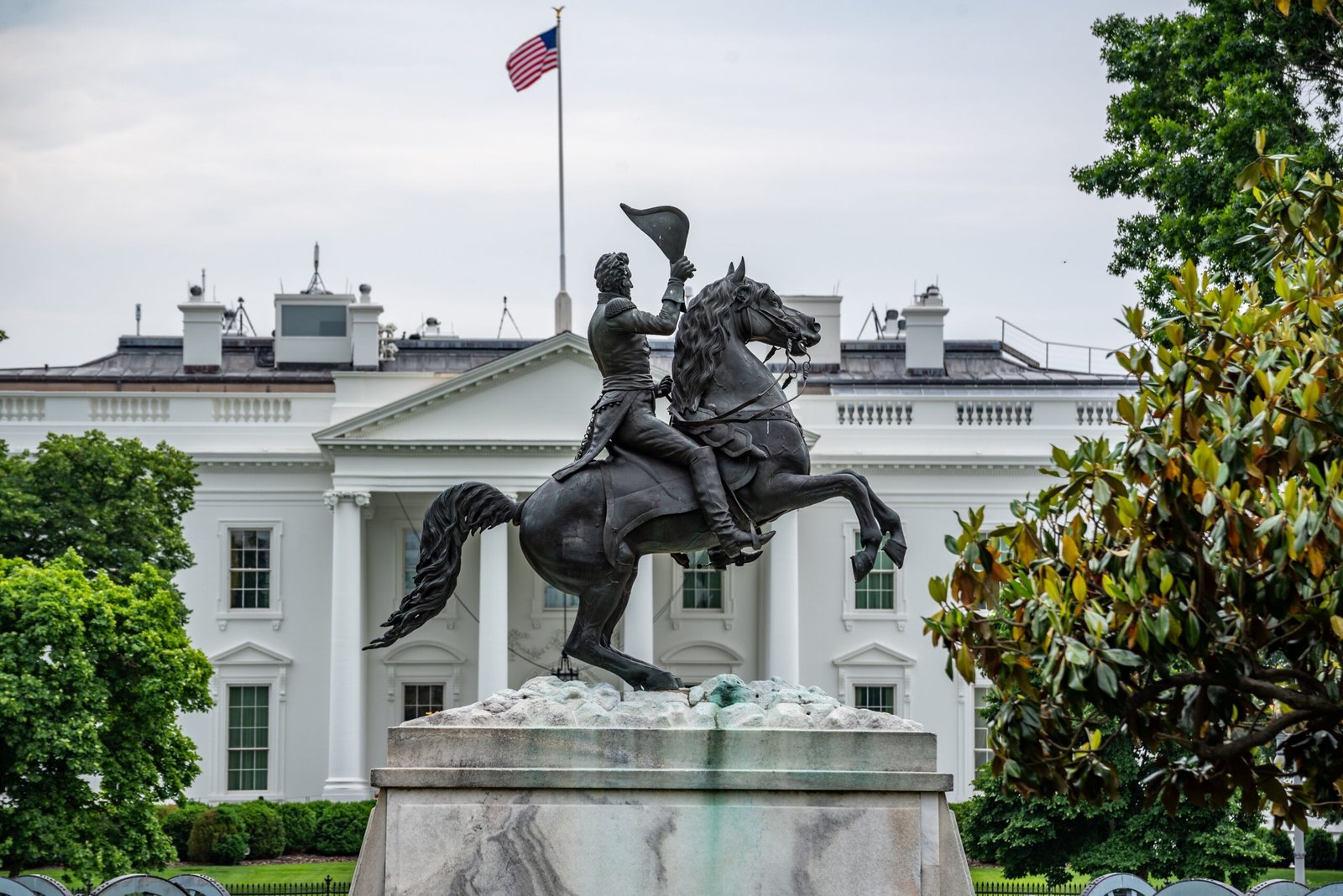
Robert E. Lee was a prominent American military officer best known for commanding the Confederate Army of Northern Virginia during the American Civil War (1861–1865). Born on January 19, 1807, in Virginia, Lee served in the United States Army for more than three decades before resigning his commission after Virginia seceded from the Union. His military career included service in the Mexican-American War, leadership at the United States Military Academy at West Point, and command of Confederate forces in some of the Civil War’s most consequential battles.
The history of Robert E. Lee is complex because his military reputation, his decision to join the Confederacy, and his connection to slavery remain central to discussions of American history. Although he demonstrated considerable tactical ability on the battlefield, he fought for a government established to preserve slavery. His surrender in April 1865 marked a decisive moment in the Confederacy’s defeat, and his later presidency of Washington College shaped his postwar public image. Understanding Robert E. Lee’s biography, military career, and legacy requires examining both his achievements and the historical consequences of his choices.
Who Was Robert E. Lee? Early Life and Family Background
Robert Edward Lee was born on January 19, 1807, at Stratford Hall in Westmoreland County, Virginia. He was the son of Henry Lee III, a Revolutionary War cavalry officer popularly known as “Light-Horse Harry,” and Anne Hill Carter Lee. His family belonged to Virginia’s established social elite, although financial difficulties affected the family’s circumstances during his childhood.
Lee received his early education in Virginia before entering the United States Military Academy at West Point in 1825. He graduated in 1829, ranking second in a class of 46 cadets and earning no demerits during his time at the academy. His performance reflected strong discipline and academic ability, particularly in the technical subjects associated with military engineering.
After graduation, Lee received a commission as a second lieutenant in the United States Army Corps of Engineers. In 1831, he married Mary Anna Randolph Custis, whose family connections included George Washington through her grandfather, George Washington Parke Custis. The couple had seven children and maintained their family home at Arlington House, near Washington, D.C.
Lee’s early life established the foundation for his professional reputation as an engineer and military officer. However, the wealth and social standing associated with his family also connected him to the plantation system and slavery that shaped Virginia’s economy before the Civil War.
Robert E. Lee’s Military Career Before the Civil War
Before becoming a Confederate general, Robert E. Lee built a substantial career in the United States Army. His early assignments focused heavily on engineering, including work on coastal defenses, fortifications, and other military infrastructure. These responsibilities helped develop his understanding of terrain, logistics, defensive positions, and the movement of troops.
During the Mexican-American War (1846–1848), Lee served under General Winfield Scott. He carried out important reconnaissance missions that helped American forces identify routes and assess enemy positions. His service during the campaign, including operations leading to the capture of Mexico City, brought him recognition and promotions.
In 1852, Lee became superintendent of West Point, a position he held for approximately three years. He oversaw aspects of the academy’s administration, education, and military training. In 1855, he transferred to the cavalry and later served in Texas, gaining experience beyond his earlier engineering assignments.
Another significant episode occurred in 1859, when Lee commanded U.S. Marines sent to suppress abolitionist John Brown’s raid on the federal arsenal at Harpers Ferry, Virginia. Brown intended to seize weapons and encourage an uprising against slavery. Federal forces captured Brown and his surviving associates, and Brown was subsequently tried and executed.
These experiences made Lee a respected professional officer before the Civil War. Nevertheless, his later decision to resign from the United States Army and join the Confederacy transformed his place in American history.
Why Robert E. Lee Joined the Confederacy
One of the most consequential decisions in Robert E. Lee’s life came in April 1861, when the United States faced the outbreak of civil war. Lee opposed the dissolution of the Union and expressed concern about secession. However, when Virginia voted to leave the Union following the attack on Fort Sumter and President Abraham Lincoln’s call for troops, Lee faced a conflict between his federal military obligations and his allegiance to his home state.
Lee declined an offer to command the principal Union army being assembled to suppress the rebellion. On April 20, 1861, he resigned his commission in the United States Army. Days later, he accepted a command in Virginia’s military forces, which subsequently became part of the Confederate war effort.
Lee’s decision is sometimes described as a choice between country and state. That description explains part of his reasoning, but it does not erase the political purpose of the Confederacy. The Confederate government was founded by seceding slaveholding states, and the preservation of slavery was a central cause of secession. By accepting Confederate command, Lee helped lead the military effort of a government committed to maintaining that institution.
Lee also had direct connections to slavery through his family and the Arlington estate. As executor of George Washington Parke Custis’s estate, he oversaw enslaved people and the management of plantation property. The National Park Service documents disputes surrounding Lee’s handling of the estate and the eventual emancipation of the enslaved people covered by the will.
Understanding Lee’s decision therefore requires considering both his personal allegiance to Virginia and the broader political and social system he chose to defend.
Robert E. Lee During the American Civil War
In June 1862, Confederate President Jefferson Davis placed Lee in command of the principal Confederate army defending Richmond, Virginia. Lee named it the Army of Northern Virginia, and it became the central military force under his leadership for the remainder of the conflict.
Lee developed a reputation for bold maneuvers, rapid concentration of forces, and willingness to take calculated battlefield risks. His army won important victories at the Second Battle of Manassas in 1862, Fredericksburg in December 1862, and Chancellorsville in May 1863. These successes helped make him one of the Confederacy’s most prominent military leaders.
However, Lee’s campaigns also involved serious setbacks and costly decisions. At the Battle of Antietam in September 1862, his Maryland campaign ended without the strategic success he had sought. The battle’s outcome helped provide Lincoln with an opportunity to issue the preliminary Emancipation Proclamation, changing the war’s political and moral dimensions by making emancipation an explicit Union war aim.
In July 1863, Lee led Confederate forces into Pennsylvania, culminating in the Battle of Gettysburg. After three days of fighting, the Confederates suffered heavy casualties and retreated to Virginia. The defeat ended Lee’s second major invasion of the North and represented a critical turning point in the war.
During 1864 and early 1865, Lee’s army faced sustained Union pressure under Ulysses S. Grant. The Overland Campaign and the siege of Petersburg depleted Confederate manpower and resources. Although Lee’s forces continued resisting, their strategic position deteriorated as Union armies gained control of vital routes and supplies.
Lee’s military record consequently includes both notable battlefield victories and major defeats. His tactical skill could not overcome the Confederacy’s growing disadvantages in population, industrial production, supplies, and manpower.
Robert E. Lee’s Surrender at Appomattox in 1865
By the spring of 1865, the Confederacy was approaching military collapse. Union forces captured Richmond, the Confederate capital, and Lee’s army struggled to obtain the supplies and reinforcements needed to continue fighting. After Union troops blocked further escape routes, Lee recognized that continuing the campaign was no longer a realistic option.
On April 9, 1865, Robert E. Lee surrendered the Army of Northern Virginia to Union General Ulysses S. Grant at Appomattox Court House, Virginia. The surrender terms allowed Confederate soldiers to return home after being paroled, and many were permitted to keep their horses. Grant’s terms helped facilitate the disbandment of Lee’s army and reduced the immediate likelihood of further organized resistance by those troops.
The surrender was not the formal end of every Confederate military operation, but it marked a decisive turning point toward the collapse of the Confederacy. Lee declined suggestions to continue fighting through guerrilla warfare, recognizing the likely consequences of prolonging the conflict.
Appomattox later became an important symbol of the war’s conclusion and the difficult process of national reunification. The meeting between Lee and Grant is frequently discussed as an example of how military surrender terms could influence the transition from conflict to peace.
Robert E. Lee’s Life After the Civil War and His Death
After surrendering, Lee returned to civilian life in Virginia. In 1865, he accepted the presidency of Washington College in Lexington, Virginia, an institution that was later renamed Washington and Lee University. He remained in the position until his death.
As college president, Lee focused on educational administration and the institution’s development. His postwar public statements generally emphasized restoring peace and rebuilding the country, although his views on Reconstruction and African American civil and political rights reflected the racial attitudes of many white Southern elites of the period. His legacy cannot be fully understood without examining these views alongside his calls for reconciliation.
Lee also faced legal and political consequences after the war. Like other former Confederate leaders, he was indicted for treason, although he was not tried. President Andrew Johnson issued a pardon in 1868, but questions surrounding Lee’s citizenship and the handling of his formal amnesty application remained part of the historical record.
Robert E. Lee died on October 12, 1870, in Lexington, Virginia, following an illness. He was buried at the college, where his grave remains associated with Lee Chapel. His death prompted widespread mourning among former Confederates and contributed to the development of a powerful postwar image of Lee as a symbol of Southern identity.
Over time, memorial organizations and popular accounts often emphasized his military ability, personal discipline, and conduct at Appomattox. Some of these portrayals minimized or overlooked the central role of slavery in the Confederacy and Lee’s own participation in its military leadership. Modern historical analysis increasingly considers how these competing narratives shaped public memory.
Robert E. Lee’s Legacy and Historical Significance in 2026
The legacy of Robert E. Lee remains contested in the United States. For generations, many Americans celebrated him as a skilled commander and a symbol of Southern heritage. His name appeared on schools, roads, military installations, statues, and public monuments. His reputation was also influenced by the Lost Cause movement, which promoted idealized interpretations of the Confederacy and often minimized slavery’s role in causing the Civil War.
Historians today distinguish between Lee’s military capabilities and the political cause he served. His battlefield decisions, leadership style, and role in the war remain important subjects of military history. At the same time, his service as a senior Confederate commander placed him at the center of an effort to preserve a political system built on slavery.
Debates about Confederate monuments and memorials have brought these questions into public discussion. Some communities emphasize historical preservation and the study of Lee’s military career, while others argue that honoring Confederate leaders in prominent civic spaces can celebrate a cause associated with slavery and racial inequality. The National Park Service’s historical materials offer context for examining Lee’s life beyond simplified heroic or villainous portrayals.
In 2026, studying Robert E. Lee provides an opportunity to explore the relationship between military leadership, political allegiance, slavery, emancipation, and national reconciliation. A balanced historical account neither ignores his military abilities nor treats those abilities as a justification for the Confederacy’s objectives. Instead, it places his choices within the events and consequences of the American Civil War.
Frequently Asked Questions About Robert E. Lee
1. Who was Robert E. Lee?
Robert E. Lee was a career American army officer who became the leading Confederate general commanding the Army of Northern Virginia during the American Civil War. After the war, he served as president of Washington College in Virginia.
2. When was Robert E. Lee born?
Robert E. Lee was born on January 19, 1807, at Stratford Hall in Westmoreland County, Virginia.
3. Why is Robert E. Lee famous?
He is best known for commanding Confederate forces during the Civil War, leading several major battles, surrendering to Ulysses S. Grant at Appomattox Court House, and later serving as a college president.
4. Did Robert E. Lee fight for the Union or the Confederacy?
Lee initially served in the United States Army. After Virginia seceded in 1861, he resigned his federal commission and joined Virginia’s military forces, subsequently becoming the leading commander of the Confederate Army of Northern Virginia.
5. When did Robert E. Lee surrender?
Lee surrendered the Army of Northern Virginia on April 9, 1865, at Appomattox Court House, Virginia.
6. What did Robert E. Lee do after the Civil War?
He became president of Washington College in Lexington, Virginia, in 1865 and served in that role until his death in 1870.
7. When did Robert E. Lee die?
Robert E. Lee died on October 12, 1870, in Lexington, Virginia, at the age of 63.
8. Why is Robert E. Lee’s legacy controversial?
His military reputation and postwar calls for reconciliation are weighed against his leadership of Confederate forces fighting to preserve a government committed to slavery. His legacy is also connected to debates over Confederate monuments, racial equality, and how American history should be remembered.
Conclusion
Robert E. Lee remains one of the most consequential and debated figures in American Civil War history. His rise from a West Point graduate and U.S. Army officer to the commander of the Confederacy’s most prominent army placed him at the center of a conflict that transformed the United States. His victories, defeat at Gettysburg, surrender at Appomattox, and later work in education all contributed to his historical reputation.
Yet Robert E. Lee’s legacy extends beyond military strategy. His decision to join the Confederacy, his connection to slavery, and his views during Reconstruction are essential parts of his biography. Examining these elements together allows us to understand not only Lee as an individual but also the wider political, social, and moral conflicts of nineteenth-century America. His life remains an important subject for anyone seeking a deeper understanding of the Civil War and its enduring influence on the nation.


VW Tiguan 2026: Price, Specs, Interior, Engine, and Features

Great Pyrenees Appearance, Size, and Breed Characteristics

Honda CR-V Hybrid 2026: MPG, Price, Specs & Review

Playing Game Site PlayBattleSquare (2026): Complete Guide to Features, Gameplay, Community, and Gaming Experience

Is Mychael Schnell Married? (2026) Everything We Know About the Journalist’s Personal Life, Career, and Background

The #Thriftyevents.net: A Complete Guide to Affordable Event Planning and Budget-Friendly Celebrations in 2026
 Gaming3 months ago
Playing Game Site PlayBattleSquare (2026): Complete Guide to Features, Gameplay, Community, and Gaming Experience
- Celebrity3 months ago
Is Mychael Schnell Married? (2026) Everything We Know About the Journalist’s Personal Life, Career, and Background
- Blog3 months ago
The #Thriftyevents.net: A Complete Guide to Affordable Event Planning and Budget-Friendly Celebrations in 2026
- Celebrity4 months ago
Isaac Ortega: Biography, Career, Achievements, and Growing Influence
- Technology4 months ago
Slylar Box: A Complete Guide to Features, Benefits, Uses, and What You Should Know
- Food3 months ago
Best Calçots with Romesco Near Me: The Ultimate 2026 Guide to Finding Authentic Catalan Grilled Onions
- Fashion3 months ago
www.redandwhitemagzcom: A Complete Guide to the Digital Magazine Platform in 2026
- Entertainment4 months ago
Buffstreams: Everything You Need to Know About the Popular Sports Streaming Platform